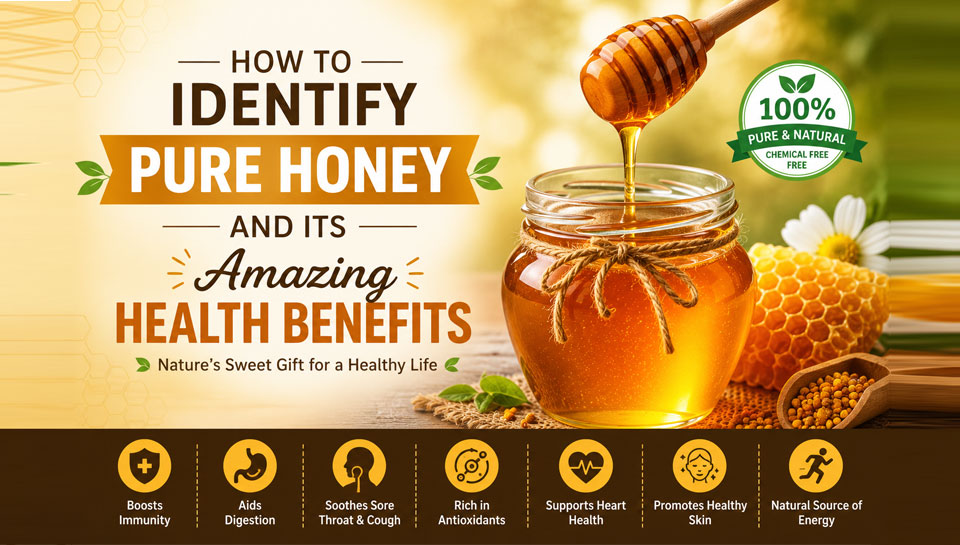
How to Identify Pure Honey and Its Amazing Health Benefits
H oney has been treasured for thousands of years as both a delicious natural sweetener and a traditional health remedy. Whether used in warm water, herbal teas, desserts, or home remedies, pure honey offers much more than sweetness. However, with the growing availability of adulterated honey in the market, it has become increasingly important to know how to identify genuine, high-quality honey.
In this guide, we’ll explain what pure honey is, how to identify it, its incredible health benefits, and the best ways to use it in your daily routine.
What Is Pure Honey?
Pure honey is a natural product made by honeybees from the nectar of flowers without the addition of sugar syrup, artificial sweeteners, colors, or preservatives. It retains its natural enzymes, antioxidants, vitamins, minerals, and beneficial plant compounds.
Unlike heavily processed honey, pure honey undergoes minimal processing, helping preserve many of its naturally occurring nutrients.
Why Is Honey Often Adulterated?
Unfortunately, honey is among the most commonly adulterated food products. Some manufacturers mix honey with:
These additives increase volume while reducing quality and nutritional value.
How to Identify Pure Honey
1. Check the Label
Always read the ingredient list.
A quality honey product should contain:
- 100% Pure Honey
- No Added Sugar
- No Artificial Flavours
- No Preservatives
2. Observe the Texture
Pure honey is generally thick and smooth.
It should:
- Flow slowly
- Spread evenly
- Not appear watery
Very runny honey may indicate excess moisture or adulteration.
3. Look for Crystallization
Many people mistakenly believe crystallized honey is spoiled.
In reality, crystallization is a natural process in many genuine honey varieties and often indicates minimal processing.
4. Smell the Honey
Pure honey usually has:
- Mild floral aroma
- Natural fragrance
- Pleasant sweetness
Artificial honey often smells overly sugary or lacks a natural floral scent.
5. Water Test (Not Definitive)
Add one spoon of honey to a glass of water.
Pure honey tends to settle before dissolving, while adulterated honey may disperse more quickly. However, this is only a rough indication and should not be considered a definitive test.
6. Thumb Test (Not Definitive)
Place one drop of honey on your thumb.
Pure honey often remains relatively intact instead of spreading immediately, but this method cannot reliably confirm authenticity.
Health Benefits of Pure Honey
1. Rich in Antioxidants
Pure honey contains natural antioxidants like flavonoids and phenolic compounds that help protect the body from oxidative stress.
Antioxidants support healthy aging and overall wellness.
2. Supports Immunity
Natural honey contains bioactive compounds that may support normal immune function when included as part of a balanced diet.
3. Soothes Sore Throat and Cough
Honey has long been used as a traditional remedy for throat irritation.
A spoonful of honey or honey mixed with warm water may help soothe occasional coughs and sore throats.
4. Supports Digestive Health
Many people consume honey to promote digestive comfort.
Honey also contains natural compounds that may support beneficial gut bacteria.
5. Natural Energy Booster
Honey provides easily digestible carbohydrates that offer a quick source of natural energy, making it a popular choice before physical activity.
6. Supports Wound Care
Medical-grade honey has been used in healthcare settings because of its antimicrobial properties. However, ordinary food-grade honey should not replace professional medical treatment for wounds.
7. Better Alternative to Refined Sugar
When used in moderation, pure honey can be a flavorful alternative to refined sugar in beverages and recipes.
Ways to Include Honey in Your Daily Routine
- Add to warm water with lemon
- Mix into herbal tea
- Drizzle over oats or yogurt
- Use in smoothies
- Sweeten homemade desserts
- Spread on whole-grain toast
- Mix with herbal preparations